- Apr 22, 2026
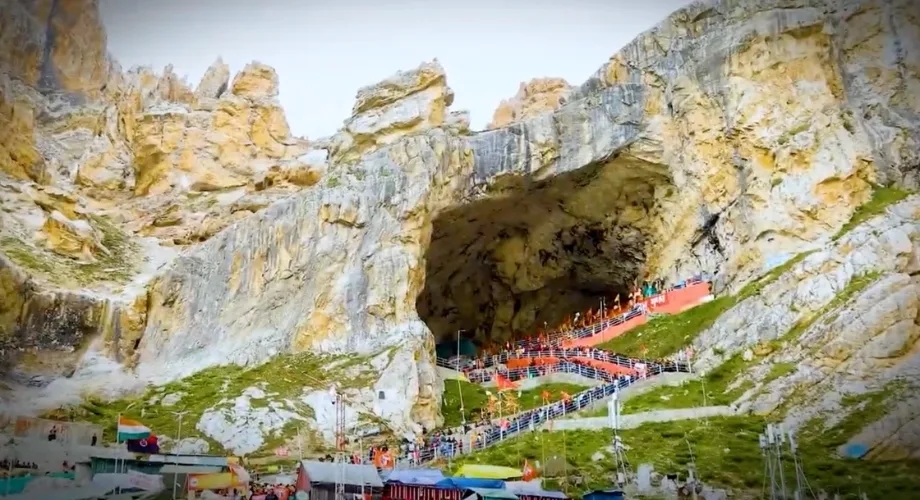
Deep inside the valleys of Jammu and Kashmir, and away from all the hubbub, lies a place of sacred value in Hinduism: Amarnath Temple. While many might see the place simply as a tourist destination, the devotees of Lord Shiva regard it as a classroom on the immortality of life and the meaning of life that he gave to his wife, Goddess Parvati. Amarnath Temple is a Hindu shrine located in the Pahalgam tehsil of Anantnag district of Jammu and Kashmir, India. The temple is actually a cave in the Sind Valley that receives heavy snowfall for most of the year, with brief relief for a few months, during which pilgrims have a chance to pay respects and seek blessings. Out of the 51 Shakti Peethas that have been dispersed all over the nation, Amarnath is the holy abode of the Mahamaya Shakti Peetha, which also commemorates the fallen part of Goddess Sati. Topped by the mountains at an altitude of 3,888 meters, the Amarnath Yatra is both a pious Hindu Sacrifice and an amazing destination for finding relief and beauty. If you are looking to make it to the Amarnath Yatra 2026, this post will help you understand the basics for better planning.
What is the Amarnath Yatra?
The Amarnath Yatra is the annual holy pilgrimage of great significance in Hinduism and is linked to Lord Shiva, the almighty. People from all over the world, devotees, take part in the Amarnath yatra and end it by reaching the holy cave and being blessed. The yatra is supervised, organised, and facilitated by the Government of India. The yatra is a trail left by Lord Shiva that starts from Pahalgam, where Shiva left his bull, Nandi, moves to Chandanwari to pull out the moon stuck in his hairlocks, and ends at Sheshnag Lake, where he leaves his serpents behind. After reaching Mahagunas Top, he left Ganesha behind to go to Panchtarni to disperse the five crucial elements of nature. Finally, reaches the Amarnath Cave/Temple, marking it as the site of the revelation in the form of the Lingam. The trail, or the journey, to Amarnath is not for the weak-hearted but for the courageous ones whose beliefs don't get shaken even in the worst. More than a physical journey, it is a spiritual route towards paying devotion to the One above.
See also: Badrinath Yatra 2026: How to Reach, Best Time & Travel Tips
What is the Significance of the Amarnath Temple?
The truth behind the Amarnath Yatra dates back to when Goddess Parvati asked Lord Shiva about the garland of heads (mund mala) he wears, to which he replied that whenever Parvati is reborn in another form, he adds another head to the garland. This ignited a fire of curiosity in Parvati about how Lord Shiva is immortal while she is not. This is the time when Lord Shiva revealed the truth behind the Amarnath Cave by narrating the Amar Katha, the story of immortality, to Parvati. To find a perfect, isolated location for the narration, Lord Shiva chose the Amarnath Cave.
To begin with, in the Amar Katha, Lord Shiva sought complete secrecy, so he removed all living entities residing in his body, including the moon, serpents, Nandi, the five essential elements, and his son, Lord Ganesha. To completely remove any sign of life around him, he lit a circle of fire around the cave. In complete isolation, he began the narration, and Parvati entered Samadhi. Lord Shiva began the Amar Katha, and in between, Parvati fell into a deep slumber and missed the rest of the part. While a pair of pigeons resided in the cave, they witnessed the complete story and became immortal themselves. Even now, it is believed that the pigeons live inside the cave, witnessing the deity and his divine blessing of the pilgrims.
See also: Char Dham Yatra Registration 2026
What are the Rituals of the Amarnath Yatra?
There is a complete procedure to follow when you are off for the Amarnath Yatra. In Hinduism, the role of sacred rituals in expressing gratitude to the Almighty is of crucial importance. The pilgrims engage in many practices, all with the common motive of seeking blessings. It is a trail because of the significance every part and location plays, so you should know beforehand not to miss any. Below are the traditional rituals of the Amarnath Yatra that should be followed:
- The Holy Bath or Snan: After you reach the beginning of the Amarnath Yatra, you must partake in the act of holy snan, particularly in Amravati, which is meant to provide purification to the body and the soul. This is a crucial step in the Amarnath Yatra as it begins to create a link between you and the divine. Also, the holy bath is said to cleanse you of all sins, giving you a fresh start.
- Puja/Abhishek at the Amarnath Cave: The next part of the Amarnath Journey involves performing a Puja/Abhishek at the Lord Shiva temple in the Amarnath Cave. The Shiva Lingam at the Amarnath Shrine is a natural formation carved by the glacier, shaped like a Shivling. Devotees offer milk, honey, flowers, and other elements. During puja, people express their gratitude to the Almighty and seek his blessings.
- Attend Aarti at the Amarnath Temple: Inside the Amarnath Cave, the final act of devotion is the holy aarti. It is the major part of the whole yatra. All the devotees gather around the temple with the priests and sing religious hymns to praise Lord Shiva and show gratitude for the life he has given. The atmosphere becomes spiritual and holy, making it perfect for seeking absolution.
- Holy Offerings and Prayers for Blessings: Pilgrims who travel from the corner of the world to the Amarnath Cave find a way to show gratitude. They bring offerings to Lord Shiva at the temple in the form of prasad, chandan, and vibhuti, and present them to the priest. With these offerings, the yatris seek blessings and pray for their family, health, and prosperity.
See also: Kedarnath 2026 Travel Guide For First Time Visitors
When will the Amarnath Yatra begin in 2026?
Since the Amarnath Yatra is a trail filled with climatic disturbances and geographically isolated places, the yatra is only allowed for a short period annually. The temple is located in the steep, hilly terrain of Jammu and Kashmir, which is covered in snow for most of the year, making the trek almost inaccessible to many. This challenging pilgrimage timing is then mixed with the auspicious time of the year, i.e., the holy month of Shravan. The Shri Amarnathji Shrine Board decides the dates. The Amarnath Yatra 2026 begins from 3rd July 2026, so plan your pilgrimage accordingly.
Does the Amarnath Yatra need registration?
For pilgrims planning to participate in the Amarnath 2026 Yatra, registration is compulsory. You can register either directly with the Shri Amarnathji Shrine Board (SASB) or with any of the 540 authorised bank branches across the nation. It is a must, and without it, you will not be allowed to go on the religious journey. You can choose the method that seems convenient to you. The Amarnath Yatra can also be registered in advance at the same portal. So, for the Amarnath Yatra 2026 online registration, you can follow the steps below:
- Visit the official website of Shri Amarnathji Shrine Board at jksasb.nic.in.
- From the options on the left, select the online services.
- Click on the Yatra Permit Registration.
- Read and accept all the guidelines and terms and conditions before proceeding.
- Enter all remaining details, such as the name, yatra date, identification number, and contact details.
- Upload the passport-size photo in the requested column.
- Upload the scanned copy of the Compulsory Health Certificate on the portal.
- Get a verification code on the registered contact number.
- Pay for the Amarnath yatra tickets booked by the generated payment link.
- Download the Yatra Registration Permit from the website after completion.
See also: Ramanathaswamy Jyotirlinga Temple Guide
Is there a fee for the Amarnath Yatra Registration?
When you apply for registration for your Amarnath Yatra in 2026, you will be directed to pay a meagre fee to complete the process. While the registration fee may spike, it is not mandatory. To generate the Yatra Permit, you need to pay the fees. The Amarnath Yatra 2026 registration fee is around INR 150 per yatri for the offline or bank registration, INR 220 for online registration, and INR 1550 for foreign visitors, which is non-refundable even if you do not complete the yatra. So, make sure you provide the correct documents so you can proceed to the payment option and complete your Amarnath yatra registration.
What are the rules before embarking on the Amarnath Yatra?
A lot of thought and preparation go into the planning of a successful and safe Amarnath Yatra. The respective authority has made plenty of rules that you must follow from the time of registration until you go on the yatra. A thorough and careful review should be given to the documents you upload for verification. Below are some rules that should be followed before embarking on the Amarnath Yatra:
- Carry the medical certificates issued by authorised doctors in your state, dated on or before the latest date of applying for registration.
- You should carry your original identification card and the medical certificate to the yatra for complete verification, if necessary.
- Make sure that the sizes of the photograph and the health certificate are not larger than prescribed. The maximum size for the photograph and the medical certificate is 1 MB.
- The acceptable formats for the photo file to upload to the website are JPG or JPEG.
- People under 13 or above 70 years of age are not allowed to go on the Amarnath Yatra. Any woman who has crossed the 6-week pregnancy period is also prohibited from taking part in the yatra.
See also: Kashi Vishwanath Temple Varanasi
What are the Do's and Don'ts During Amarnath Yatra?
- Refrain from indulging freely in smoking, alcohol, or consuming any caffeinated drinks.
- You should start deep-breathing exercises, such as Pranayama, to establish a rhythm that will eventually improve the efficiency of the trek.
- Start drinking plenty of water and other fluids to stay hydrated for the trek.
- Consume more carbohydrate-rich foods to prepare your body.
- If you experience any discomfort at high altitude, descend immediately and contact the nearest medical facility for help.
- Wear trekking shoes, as the yatra involves steep terrain.
- Carry warm clothes, rainproof jackets, gloves, walking sticks, and other essentials for the yatra.
- Do not forget to carry all the documents you uploaded to the portal for registration verification.
- Collect the RFID Card from the established centres in Jammu and Kashmir.
- Do not litter on the yatra, as the authorities can penalise you.
- Keep up with the weather warnings and travel accordingly.
- You should not overexert on the yatra and take regular breaks.
Conclusion:
The Amarnath Yatra is rooted in Hinduism. Every Shiva devotee, once in a lifetime, wishes to visit the temple to see the divinity in all its forms and how nature itself bends to make way for the divine intervention of Lord Shiva to offer blessings. There is great significance to the temple, its formation, and the prayers, in addition to the beauty of the place. The Amarnath Yatra is a rite not just for physical purification but also for mental and spiritual purification. With this post, you will learn in detail about the Amarnath Yatra 2026, so you can connect with your cultural heritage and experience spiritual rejuvenation.
Frequently Asked Questions
1. Who is allowed to participate in the Amarnath Yatra?
People between the ages of 13 and 70 years, who do not have any serious health conditions, are allowed to participate in the Amarnath Yatra.
2. Has anyone spotted the pair of pigeons in the Amarnath Cave?
Yes, many pilgrims have spotted the pair of pigeons in the Amarnath Cave.
3. What is the date of the commencement of the Amarnath Yatra in 2026?
The commencement date of the Amarnath Yatra in 2026 is 3rd July and will conclude on 28th August.
4. Is it important to register for the Amarnath Yatra 2026?
Yes, it is mandatory to register for the Amarnath Yatra in 2026.
5. Are the Compulsory Health Certificates mandatory for the Amarnath Yatra?
Yes, it is compulsory to carry the Compulsory Health Certificate (CHC) for the Amarnath Yatra.
6. Which route should I choose for the Amarnath Yatra?
If you want the longer, scenic route to Amarnath, choose the Pahalgam route; for the shorter, quicker route, take the Baltal route.
7. Is the Amarnath Yatra safe to travel in 2026?
Yes, it is safe to go for the Amarnath Yatra in 2026.
Contact us